
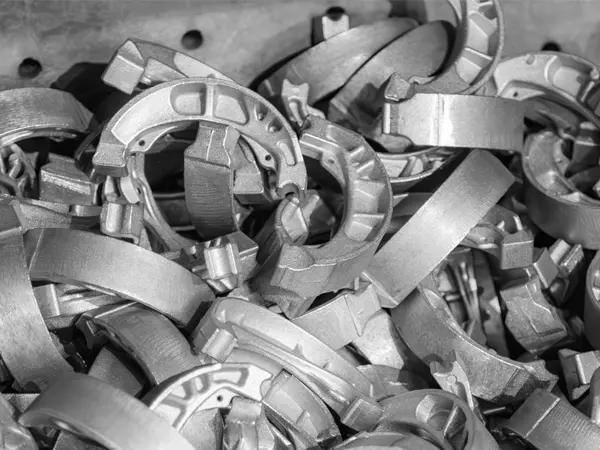
Die Casting
What is Precision Die Casting? Die casting is a high-speed metal forming process where molten metal — aluminum, zinc, magnesium, or copper alloy — is forced under extreme pressure (20–200 MPa) at high velocity (10–50 m/s) into a precision-machined steel die, solidifying in seconds into a near-net-shape part. At HY-HK, our core die casting technology spans 280T to 800T tonnage, covering Hot-Chamber (zinc/magnesium) and Cold-Chamber (aluminum/copper) processes. We deliver ±0.05mm tolerance, mirror-finish surfaces (Ra 0.8μm), and complex geometries that sand casting or investment casting simply cannot achieve — at a fraction of the cost per piece. And because it's under the HY-HK roof, every die-cast part can be seamlessly passed to our CNC trimming line or PVD coating chamber — one factory, one quality standard, zero handoff.
Technical Principle
How It Works — 5 Steps, 30 Seconds Per Part:
① Melting: Raw alloy ingots are melted in a holding furnace at precise temperatures — Aluminum ~680°C, Zinc ~420°C, Magnesium ~650°C.
② Injection: Molten metal is injected into the die cavity at 20–200 MPa pressure via a hydraulic ram (cold-chamber) or gooseneck system (hot-chamber) — fill time as fast as 0.02 seconds.
③ Solidification: The metal solidifies against the cooled die walls in 5–30 seconds, taking the exact shape of the cavity.
④ Ejection: The die opens, and ejector pins push the solidified part out — no core pull, no sand removal.
⑤ Trimming: Flash and runners are automatically trimmed — the part is ready for assembly or surface treatment. Our core technology controls every parameter in real time.